
Kunstneren
Antonio Hase
Antonio Hase blev født i 1963 i det vestlige Bosnien med efternavnet Draganović. Han kom til Hamborg i 1984, boede derefter i Luzern og har siden levet og arbejdet i München. En bemærkelsesværdigt alsidig kunstner — maler, romanforfatter, manuskriptforfatter, skuespiller og instruktør — har han viet mere end fyrre år til billedkunsten.
Han har deltaget i gruppeudstillinger siden 1985 og haft soloudstillinger siden 1986 — hidtil ti i alt. Hans værker findes i private samlinger i Tyskland, Schweiz, Canada, Kroatien og USA. Som kroatisk-tysk maler har han i de senere år opnået stadig bredere international anerkendelse.
Hans maleri er rodfæstet i abstraktionen — et valg, der tog form i midten af 1980’erne gennem venskabet med Vlado Kristl, som førte ham ind i abstraktionens verden og introducerede ham for den store tyske informel-maler Emil Schumacher. Gennem fire årtiers arbejde, fra konstruktivisme til dekonstruktivisme, har han etableret sig som pioner for dekonstruktivismen i maleriet.
Inspirations and dedications – Emil Schumacher, Vlado Kristl and Antonio Hase
"The motif of my painting is always a dedication to Schumacher and Kristl."
Antonio Hase's artistic path was shaped by encounters with great names of world art. As early as the eighties, his friend Vlado Kristl introduced him to the German painter Emil Schumacher. That meeting left a deep mark on Hase, awakening a profound bond with abstract expression to which he has remained faithful ever since.
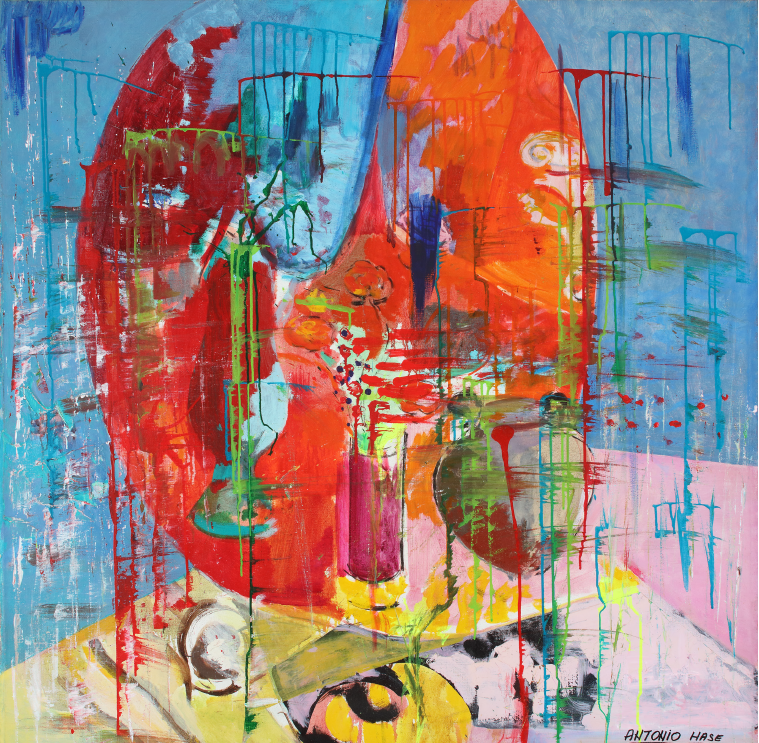
At that meeting Hase promised Schumacher that he would follow his path and devote himself to abstraction. Although both Schumacher and Kristl have since passed away, their presence lives on strongly in Hase's work. He turned their legacy into one of his significant works – a painting with the motif of a monument and an urn as a symbolic dedication to Schumacher, while scattered flower petals fall onto the urn in memory of Vlado Kristl.
Hase explains that the petals of Kristl's flowers also carry a personal meaning – they stand for the moment Kristl introduced him to Schumacher. The painting was exhibited and drew great interest, although at the time the artist had no chance to speak about its meaning in detail. Today he wants to share that story and show the deeply personal dimension of his work.
With these works Antonio Hase not only keeps the memory of his friends and mentors alive, but shows that art can be a bridge between generations and a lasting message of gratitude.