
Ο καλλιτέχνης
Αντόνιο Χάσε
Ο Αντόνιο Χάσε γεννήθηκε το 1963 στη δυτική Βοσνία με το επώνυμο Ντραγκάνοβιτς. Το 1984 έφτασε στο Αμβούργο, έπειτα έζησε στη Λουκέρνη, και έκτοτε ζει και εργάζεται στο Μόναχο. Εξαιρετικά πολυσχιδής καλλιτέχνης — ζωγράφος, μυθιστοριογράφος, σεναριογράφος, ηθοποιός και σκηνοθέτης — αφιερώνεται στις εικαστικές τέχνες για περισσότερα από σαράντα χρόνια.
Συμμετέχει σε ομαδικές εκθέσεις από το 1985 και σε ατομικές από το 1986 — έως σήμερα έχει πραγματοποιήσει δέκα ατομικές εκθέσεις. Έργα του βρίσκονται σε ιδιωτικές συλλογές στη Γερμανία, την Ελβετία, τον Καναδά, την Κροατία και τις ΗΠΑ. Ως Κροάτης-Γερμανός ζωγράφος, τα τελευταία χρόνια κερδίζει ολοένα ευρύτερη διεθνή αναγνώριση.
Η ζωγραφική του έχει τις ρίζες της στην αφαίρεση — μια επιλογή που διαμορφώθηκε στα μέσα της δεκαετίας του 1980 μέσα από τη φιλία του με τον Βλάντο Κριστλ, ο οποίος τον μύησε στον κόσμο της αφαίρεσης και τον γνώρισε με τον μεγάλο Γερμανό ζωγράφο του ινφορμέλ, Έμιλ Σουμάχερ. Σε τέσσερις δεκαετίες δουλειάς, από τον κονστρουκτιβισμό στον αποδομισμό, καθιερώθηκε ως πρωτοπόρος του αποδομισμού στη ζωγραφική.
Inspirations and dedications – Emil Schumacher, Vlado Kristl and Antonio Hase
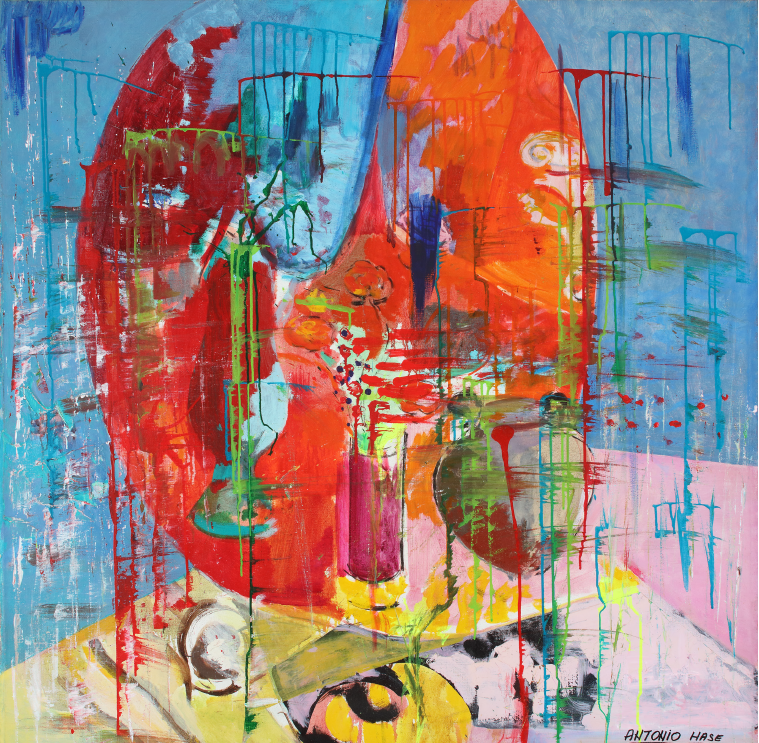
"The motif of my painting is always a dedication to Schumacher and Kristl."
Antonio Hase's artistic path was shaped by encounters with great names of world art. As early as the eighties, his friend Vlado Kristl introduced him to the German painter Emil Schumacher. That meeting left a deep mark on Hase, awakening a profound bond with abstract expression to which he has remained faithful ever since.
At that meeting Hase promised Schumacher that he would follow his path and devote himself to abstraction. Although both Schumacher and Kristl have since passed away, their presence lives on strongly in Hase's work. He turned their legacy into one of his significant works – a painting with the motif of a monument and an urn as a symbolic dedication to Schumacher, while scattered flower petals fall onto the urn in memory of Vlado Kristl.
Hase explains that the petals of Kristl's flowers also carry a personal meaning – they stand for the moment Kristl introduced him to Schumacher. The painting was exhibited and drew great interest, although at the time the artist had no chance to speak about its meaning in detail. Today he wants to share that story and show the deeply personal dimension of his work.
With these works Antonio Hase not only keeps the memory of his friends and mentors alive, but shows that art can be a bridge between generations and a lasting message of gratitude.