
Artista
Antonio Hase
Antonio Hase 1963an jaio zen mendebaldeko Bosnian, Draganović abizenarekin. 1984an Hanburgora iritsi zen, gero Luzernan bizi izan zen, eta harrezkero Municheko hirian bizi eta lan egiten du. Artista izugarri anitza — margolaria, eleberrigilea, gidoilaria, aktorea eta zuzendaria —, berrogei urte baino gehiago daramatza arte plastikoei emana.
1985etik erakusketa kolektiboetan parte hartzen du eta 1986tik bakarkakoak egiten ditu — orain arte hamar bakarkako erakusketa. Bere lanak Alemaniako, Suitzako, Kanadako, Kroaziako eta AEBetako bilduma pribatuetan daude. Kroaziar-alemaniar margolari gisa, azken urteotan gero eta nazioarteko aitorpen zabalagoa lortzen ari da.
Bere margolaritza abstrakzioan errotuta dago — laurogeiko hamarkadaren erdialdean hartutako bidea, Vlado Kristlekin izandako adiskidetasunari esker; hark abstrakzioaren mundura eraman zuen eta Emil Schumacher informelaren margolari alemaniar handia ezagutarazi zion. Lau hamarkadatako lanean, konstruktibismotik dekonstruktibismora, margolaritzako dekonstruktibismoaren aitzindari gisa finkatu da.
Inspirations and dedications – Emil Schumacher, Vlado Kristl and Antonio Hase
"The motif of my painting is always a dedication to Schumacher and Kristl."
Antonio Hase's artistic path was shaped by encounters with great names of world art. As early as the eighties, his friend Vlado Kristl introduced him to the German painter Emil Schumacher. That meeting left a deep mark on Hase, awakening a profound bond with abstract expression to which he has remained faithful ever since.
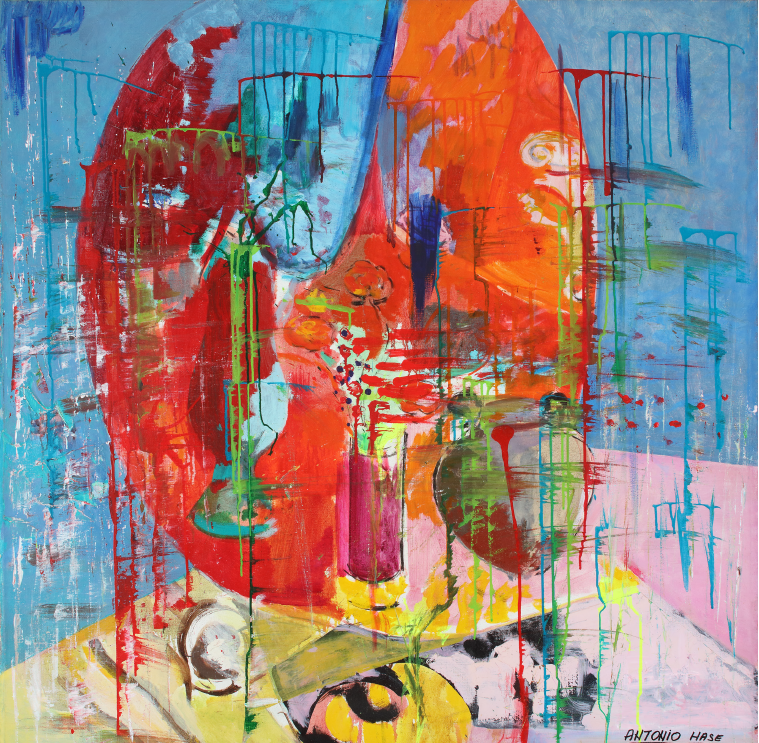
At that meeting Hase promised Schumacher that he would follow his path and devote himself to abstraction. Although both Schumacher and Kristl have since passed away, their presence lives on strongly in Hase's work. He turned their legacy into one of his significant works – a painting with the motif of a monument and an urn as a symbolic dedication to Schumacher, while scattered flower petals fall onto the urn in memory of Vlado Kristl.
Hase explains that the petals of Kristl's flowers also carry a personal meaning – they stand for the moment Kristl introduced him to Schumacher. The painting was exhibited and drew great interest, although at the time the artist had no chance to speak about its meaning in detail. Today he wants to share that story and show the deeply personal dimension of his work.
With these works Antonio Hase not only keeps the memory of his friends and mentors alive, but shows that art can be a bridge between generations and a lasting message of gratitude.