
A művész
Antonio Hase
Antonio Hase 1963-ban született Nyugat-Boszniában, Draganović vezetéknévvel. 1984-ben érkezett Hamburgba, majd Luzernben élt, azóta pedig Münchenben él és alkot. Rendkívül sokoldalú művész — festő, regényíró, forgatókönyvíró, színész és rendező —, aki több mint negyven éve szenteli magát a képzőművészetnek.
1985 óta vesz részt csoportos kiállításokon, 1986 óta pedig önálló tárlatokon — eddig tíz egyéni kiállítást rendezett. Művei magángyűjteményekben találhatók Németországban, Svájcban, Kanadában, Horvátországban és az Egyesült Államokban. Horvát-német festőként az utóbbi években egyre szélesebb nemzetközi elismerést szerez.
Festészete az absztrakcióban gyökerezik — ez az elköteleződés a nyolcvanas évek közepén alakult ki Vlado Kristllel való barátsága révén, aki bevezette őt az absztrakció világába, és megismertette a nagy német informel festővel, Emil Schumacherrel. Négy évtizedes munkássága során, a konstruktivizmustól a dekonstruktivizmusig, a festészeti dekonstruktivizmus úttörőjévé vált.
Inspirations and dedications – Emil Schumacher, Vlado Kristl and Antonio Hase
"The motif of my painting is always a dedication to Schumacher and Kristl."
Antonio Hase's artistic path was shaped by encounters with great names of world art. As early as the eighties, his friend Vlado Kristl introduced him to the German painter Emil Schumacher. That meeting left a deep mark on Hase, awakening a profound bond with abstract expression to which he has remained faithful ever since.
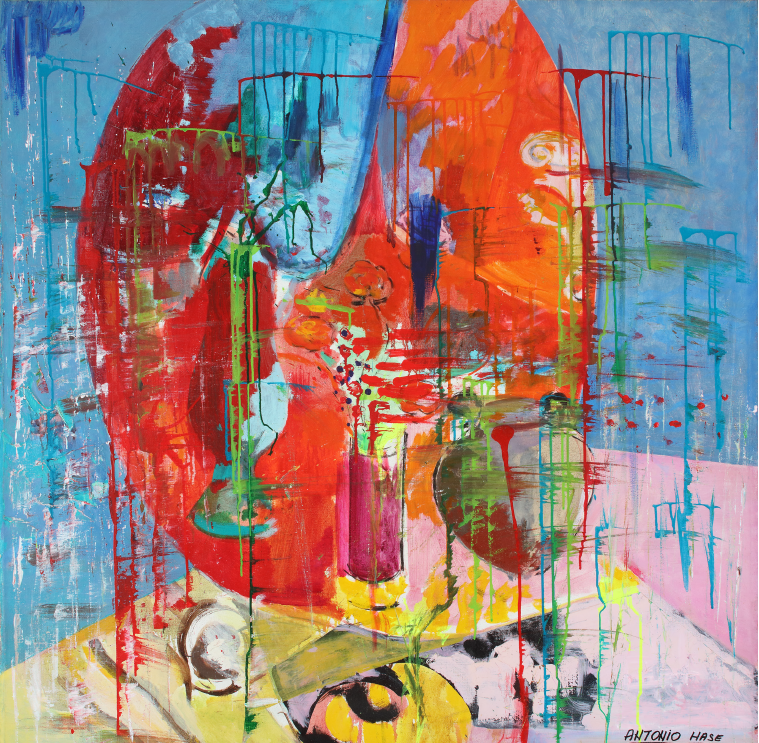
At that meeting Hase promised Schumacher that he would follow his path and devote himself to abstraction. Although both Schumacher and Kristl have since passed away, their presence lives on strongly in Hase's work. He turned their legacy into one of his significant works – a painting with the motif of a monument and an urn as a symbolic dedication to Schumacher, while scattered flower petals fall onto the urn in memory of Vlado Kristl.
Hase explains that the petals of Kristl's flowers also carry a personal meaning – they stand for the moment Kristl introduced him to Schumacher. The painting was exhibited and drew great interest, although at the time the artist had no chance to speak about its meaning in detail. Today he wants to share that story and show the deeply personal dimension of his work.
With these works Antonio Hase not only keeps the memory of his friends and mentors alive, but shows that art can be a bridge between generations and a lasting message of gratitude.