
Artysta
Antonio Hase
Antonio Hase urodził się w 1963 roku w zachodniej Bośni pod nazwiskiem Draganović. W 1984 roku przybył do Hamburga, następnie mieszkał w Lucernie, a od tego czasu żyje i tworzy w Monachium. Wszechstronny artysta — malarz, powieściopisarz, scenarzysta, aktor i reżyser — od ponad czterdziestu lat poświęca się sztukom wizualnym.
W wystawach zbiorowych bierze udział od 1985 roku, a indywidualnych od 1986 — ma ich na koncie dziesięć. Jego prace znajdują się w kolekcjach prywatnych w Niemczech, Szwajcarii, Kanadzie, Chorwacji i Stanach Zjednoczonych. Jako malarz chorwacko-niemiecki w ostatnich latach zyskuje coraz szersze uznanie międzynarodowe.
Jego malarstwo wyrasta z abstrakcji — wybór ten dojrzał w połowie lat osiemdziesiątych dzięki przyjaźni z Vlado Kristlem, który wprowadził go w świat abstrakcji i poznał z wielkim niemieckim malarzem informelu Emilem Schumacherem. W ciągu czterech dekad pracy, od konstruktywizmu po dekonstruktywizm, ugruntował pozycję pioniera dekonstruktywizmu w malarstwie.
Inspirations and dedications – Emil Schumacher, Vlado Kristl and Antonio Hase
"The motif of my painting is always a dedication to Schumacher and Kristl."
Antonio Hase's artistic path was shaped by encounters with great names of world art. As early as the eighties, his friend Vlado Kristl introduced him to the German painter Emil Schumacher. That meeting left a deep mark on Hase, awakening a profound bond with abstract expression to which he has remained faithful ever since.
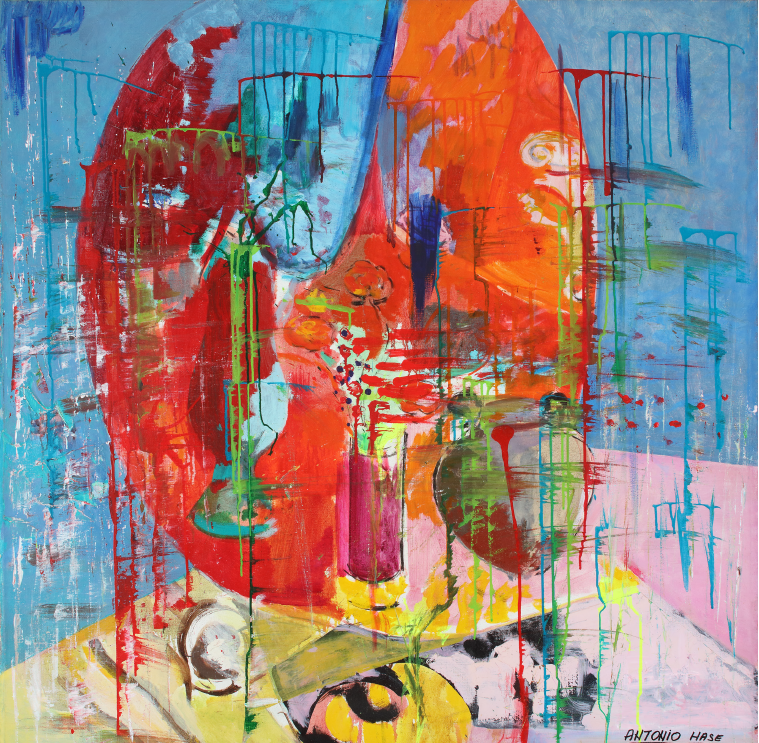
At that meeting Hase promised Schumacher that he would follow his path and devote himself to abstraction. Although both Schumacher and Kristl have since passed away, their presence lives on strongly in Hase's work. He turned their legacy into one of his significant works – a painting with the motif of a monument and an urn as a symbolic dedication to Schumacher, while scattered flower petals fall onto the urn in memory of Vlado Kristl.
Hase explains that the petals of Kristl's flowers also carry a personal meaning – they stand for the moment Kristl introduced him to Schumacher. The painting was exhibited and drew great interest, although at the time the artist had no chance to speak about its meaning in detail. Today he wants to share that story and show the deeply personal dimension of his work.
With these works Antonio Hase not only keeps the memory of his friends and mentors alive, but shows that art can be a bridge between generations and a lasting message of gratitude.