
Umelec
Antonio Hase
Antonio Hase sa narodil v roku 1963 v západnej Bosne pod priezviskom Draganović. V roku 1984 prišiel do Hamburgu, potom žil v Lucerne a odvtedy žije a tvorí v Mníchove. Mimoriadne všestranný umelec — maliar, románopisec, scenárista, herec a režisér — sa výtvarnému umeniu venuje už vyše štyridsať rokov.
Na skupinových výstavách vystavuje od roku 1985, samostatne od roku 1986 — doteraz usporiadal desať samostatných výstav. Jeho diela sú zastúpené v súkromných zbierkach v Nemecku, Švajčiarsku, Kanade, Chorvátsku a USA. Ako chorvátsko-nemecký maliar v posledných rokoch získava čoraz väčšie medzinárodné uznanie.
Jeho maľba je zakorenená v abstrakcii — rozhodnutie, ktoré dozrelo v polovici osemdesiatych rokov vďaka priateľstvu s Vlado Kristlom, ktorý ho uviedol do sveta abstrakcie a zoznámil s veľkým nemeckým maliarom informelu Emilom Schumacherom. Za štyri desaťročia práce, od konštruktivizmu k dekonštruktivizmu, sa vyprofiloval ako priekopník dekonštruktivizmu v maľbe.
Inspirations and dedications – Emil Schumacher, Vlado Kristl and Antonio Hase
"The motif of my painting is always a dedication to Schumacher and Kristl."
Antonio Hase's artistic path was shaped by encounters with great names of world art. As early as the eighties, his friend Vlado Kristl introduced him to the German painter Emil Schumacher. That meeting left a deep mark on Hase, awakening a profound bond with abstract expression to which he has remained faithful ever since.
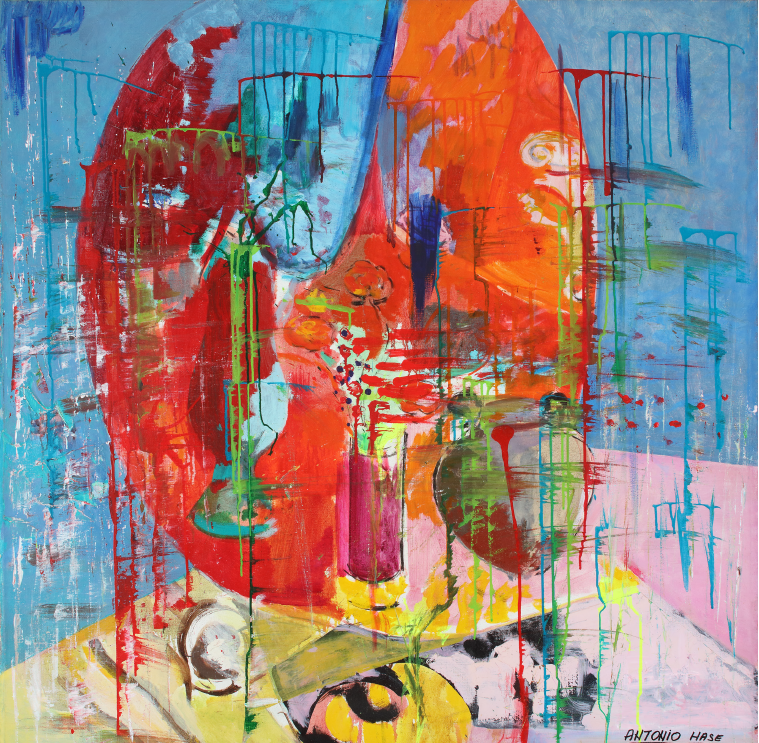
At that meeting Hase promised Schumacher that he would follow his path and devote himself to abstraction. Although both Schumacher and Kristl have since passed away, their presence lives on strongly in Hase's work. He turned their legacy into one of his significant works – a painting with the motif of a monument and an urn as a symbolic dedication to Schumacher, while scattered flower petals fall onto the urn in memory of Vlado Kristl.
Hase explains that the petals of Kristl's flowers also carry a personal meaning – they stand for the moment Kristl introduced him to Schumacher. The painting was exhibited and drew great interest, although at the time the artist had no chance to speak about its meaning in detail. Today he wants to share that story and show the deeply personal dimension of his work.
With these works Antonio Hase not only keeps the memory of his friends and mentors alive, but shows that art can be a bridge between generations and a lasting message of gratitude.