
作家
アントニオ・ハーゼ
アントニオ・ハーゼは1963年、ボスニア西部にドラガノヴィッチ(Draganović)姓で生まれました。1984年にハンブルクへ渡り、その後ルツェルンに滞在、以来ミュンヘンで暮らし制作を続けています。画家、小説家、脚本家、俳優、監督と多才な作家であり、四十年以上にわたって視覚芸術に取り組んできました。
1985年からグループ展に、1986年から個展に参加し、これまでに十回の個展を開いています。作品はドイツ、スイス、カナダ、クロアチア、アメリカの個人コレクションに収蔵されています。クロアチア系ドイツ人の画家として、近年ますます広い国際的評価を得ています。
彼の絵画は抽象に根ざしています。その方向は1980年代半ば、ヴラド・クリストル(Vlado Kristl)との親交のなかで定まりました。クリストルは彼を抽象の世界へ導き、ドイツのアンフォルメルの巨匠エミール・シューマッハーに引き合わせます。構成主義から脱構築主義へと至る四十年の制作を通じて、彼は絵画における脱構築主義の先駆者としての地位を築きました。
Inspirations and dedications – Emil Schumacher, Vlado Kristl and Antonio Hase
"The motif of my painting is always a dedication to Schumacher and Kristl."
Antonio Hase's artistic path was shaped by encounters with great names of world art. As early as the eighties, his friend Vlado Kristl introduced him to the German painter Emil Schumacher. That meeting left a deep mark on Hase, awakening a profound bond with abstract expression to which he has remained faithful ever since.
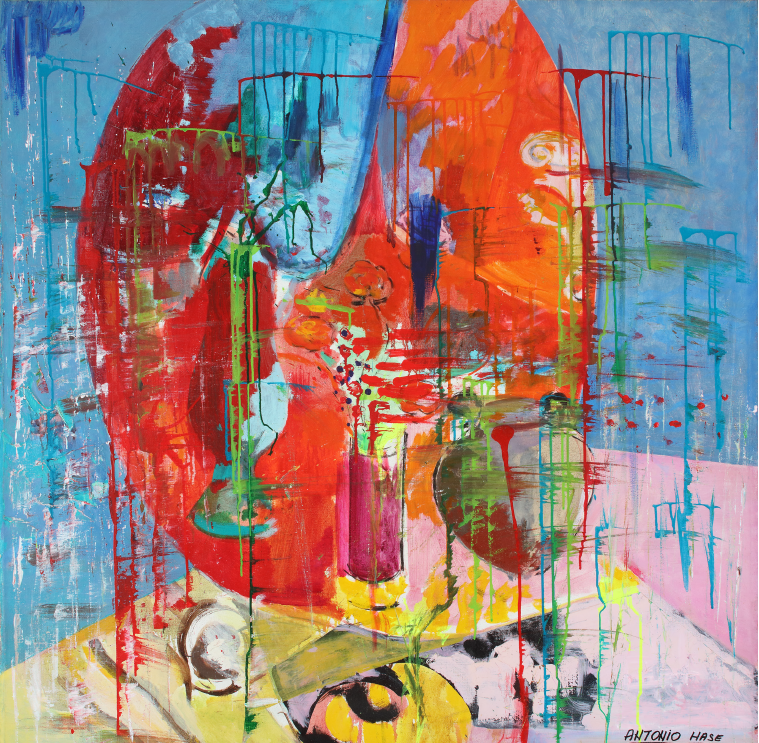
At that meeting Hase promised Schumacher that he would follow his path and devote himself to abstraction. Although both Schumacher and Kristl have since passed away, their presence lives on strongly in Hase's work. He turned their legacy into one of his significant works – a painting with the motif of a monument and an urn as a symbolic dedication to Schumacher, while scattered flower petals fall onto the urn in memory of Vlado Kristl.
Hase explains that the petals of Kristl's flowers also carry a personal meaning – they stand for the moment Kristl introduced him to Schumacher. The painting was exhibited and drew great interest, although at the time the artist had no chance to speak about its meaning in detail. Today he wants to share that story and show the deeply personal dimension of his work.
With these works Antonio Hase not only keeps the memory of his friends and mentors alive, but shows that art can be a bridge between generations and a lasting message of gratitude.