
Họa sĩ
Antonio Hase
Antonio Hase sinh năm 1963 ở miền tây Bosnia với họ Draganović. Ông đến Hamburg năm 1984, sau đó sống ở Lucerne, và từ đó đến nay sinh sống và làm việc tại München. Là một nghệ sĩ hết sức đa năng — họa sĩ, tiểu thuyết gia, biên kịch, diễn viên và đạo diễn — ông đã dành hơn bốn mươi năm cho nghệ thuật thị giác.
Ông tham gia triển lãm nhóm từ năm 1985 và triển lãm cá nhân từ năm 1986 — đến nay là mười triển lãm cá nhân. Tác phẩm của ông nằm trong các bộ sưu tập tư nhân ở Đức, Thụy Sĩ, Canada, Croatia và Hoa Kỳ. Là họa sĩ Croatia-Đức, những năm gần đây ông ngày càng được công nhận rộng rãi trên trường quốc tế.
Hội họa của ông bắt rễ trong trừu tượng — một lựa chọn hình thành giữa thập niên 1980 qua tình bạn với Vlado Kristl, người đã dẫn ông vào thế giới trừu tượng và giới thiệu ông với danh họa informel người Đức Emil Schumacher. Qua bốn thập niên làm việc, từ chủ nghĩa kiến tạo đến chủ nghĩa giải kiến tạo, ông đã khẳng định mình là người tiên phong của giải kiến tạo trong hội họa.
Inspirations and dedications – Emil Schumacher, Vlado Kristl and Antonio Hase
"The motif of my painting is always a dedication to Schumacher and Kristl."
Antonio Hase's artistic path was shaped by encounters with great names of world art. As early as the eighties, his friend Vlado Kristl introduced him to the German painter Emil Schumacher. That meeting left a deep mark on Hase, awakening a profound bond with abstract expression to which he has remained faithful ever since.
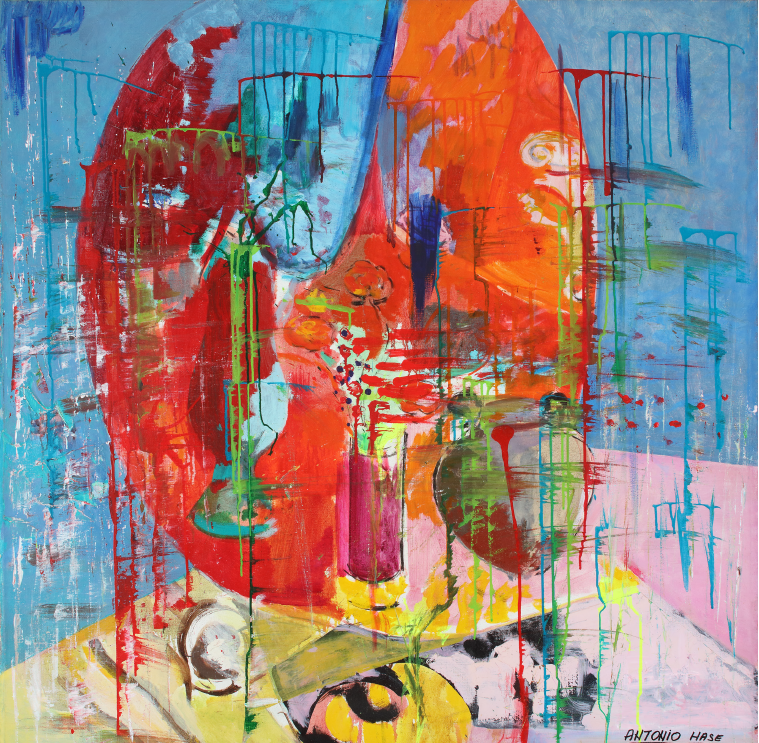
At that meeting Hase promised Schumacher that he would follow his path and devote himself to abstraction. Although both Schumacher and Kristl have since passed away, their presence lives on strongly in Hase's work. He turned their legacy into one of his significant works – a painting with the motif of a monument and an urn as a symbolic dedication to Schumacher, while scattered flower petals fall onto the urn in memory of Vlado Kristl.
Hase explains that the petals of Kristl's flowers also carry a personal meaning – they stand for the moment Kristl introduced him to Schumacher. The painting was exhibited and drew great interest, although at the time the artist had no chance to speak about its meaning in detail. Today he wants to share that story and show the deeply personal dimension of his work.
With these works Antonio Hase not only keeps the memory of his friends and mentors alive, but shows that art can be a bridge between generations and a lasting message of gratitude.